Vienna
HofburgkapelleVienna Hofmusikkapelle · Hofburg
23·032027
Tuesday · 6 pm
◆ You are hereVienna edition→Demo↗Lab↗AR↗
◆ Two editions · Holy Week 2027
▶ Project demo · Vienna edition
A walk through the 3D lab of the Hofburgkapelle: stills from the films, projected onto the altar wall, seen from different points in the room. With sound.
◆ Preface
The image
is the lamp.
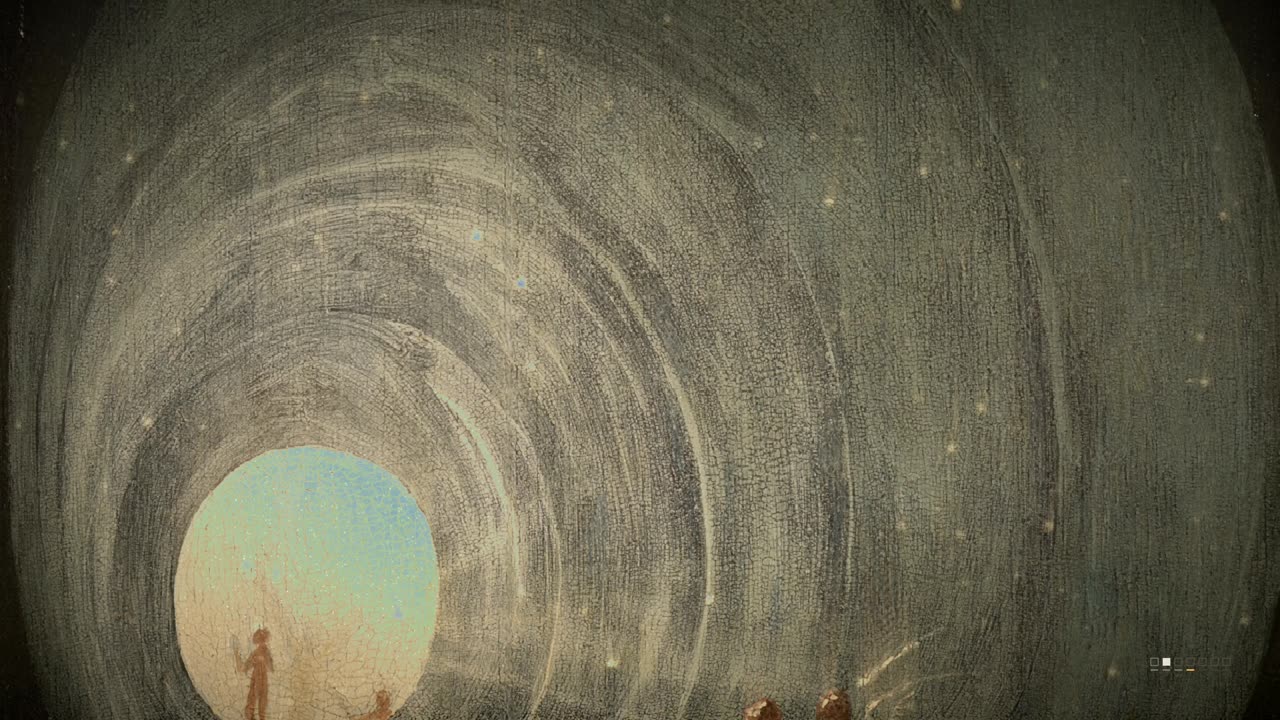
Cádiz, Good Friday 1787Santa Cueva, an underground chapel beneath the parish church of Nuestra Señora del Rosario. The Marqués de Valde-Íñigo, José Sáenz de Santamaría, has commissioned music from Haydn for the devotion. Walls, windows and pillars are draped in black, a single lamp hangs in the middle, the doors are shut. The bishop speaks one word, reflects on it and kneels. Haydn fills the pause with an adagio. Seven times. Then the earth quakes.
Vienna, 23 March 2027A Gothic chapel in the Hofburg, a grand piano, Florian C. Reithner. Of Haydn's orchestra one instrument is left; of the lamp, a projector. Nine films, one per movement. Which surface of the chapel carries them is tried out in the lab further down.
◈ House rules
◆ The number
Three are in Luke, three in John, one in Matthew and Mark. Only the devotion strings them into a sequence.
Lk 23:34 · Lk 23:43 · Jn 19:26–27 · Mt 27:46 / Mk 15:34 · Jn 19:28 · Jn 19:30 · Lk 23:46In the old reading of numbers three is the number of God and four the number of the world: four directions, four elements. Seven joins the two.
Creation has seven days. The sixth word is “It is finished”; the seventh gives the spirit back.
That is how often one should forgive (Mt 18:22). The first word on the cross is a plea for forgiveness.
Haydn called it one of the hardest tasks to let seven slow movements follow one another without tiring the listener. With the Introduzione and the earthquake there are nine.
Hob. XX/1A orchestra 1786 · XX/1B string quartet 1787 · XX/1C piano reduction 1787 · XX/2 oratorio 1796The Lord's Prayer has seven petitions, the Spirit seven gifts; Revelation counts seven churches, seven seals, seven trumpets.
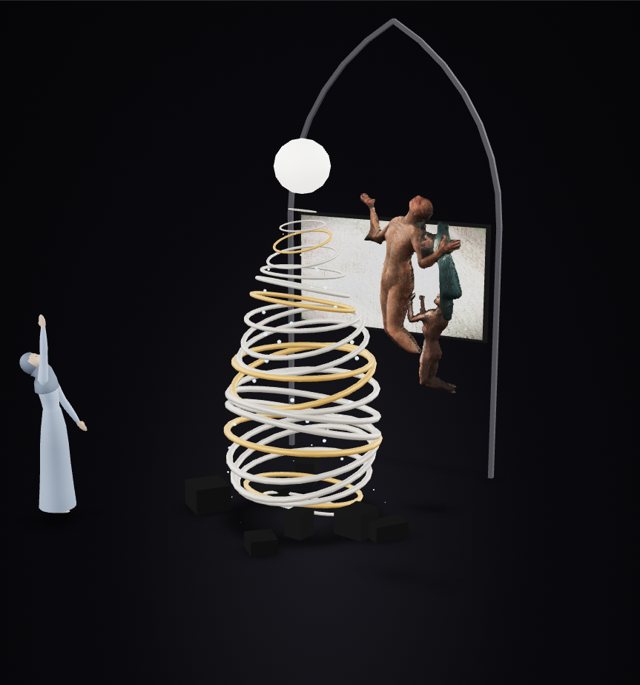
Each film is divided into seven sevenths; a bar at the bottom right keeps count. The AR bodies are built from sevens: 7 cloths and 49 points, 7 golden rods, 21 rings, 2 × 14 slats, 49 floes, 196 cubes, 7 breathing rings, 56 blocks.
“… and only one large lamp hanging in the middle lit the sacred darkness.”
Georg August Griesinger, Biographical Notes on Joseph Haydn, 1810 (translated)
“… but after each sonata there is a short pause, so that one may reflect beforehand on the text that follows.”
Joseph Haydn to William Forster, 8 April 1787 (translated)
IntroduzioneD minorMaestoso ed Adagio
(no word yet)
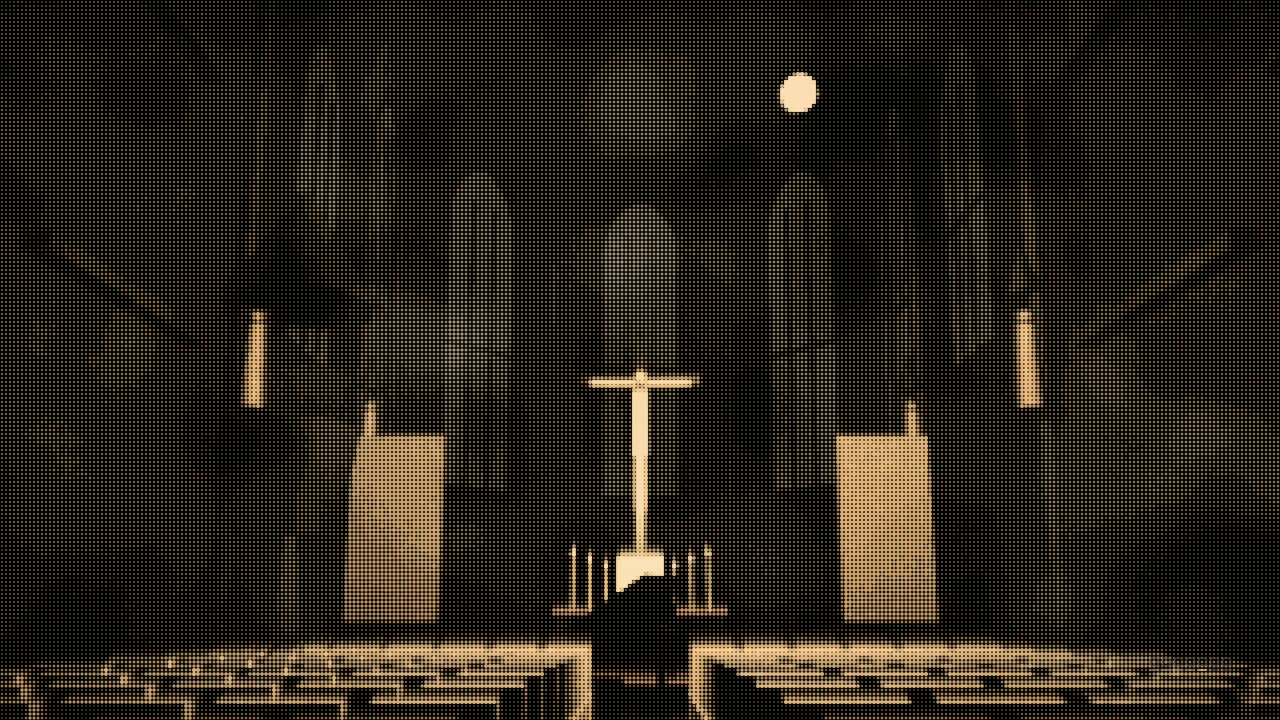
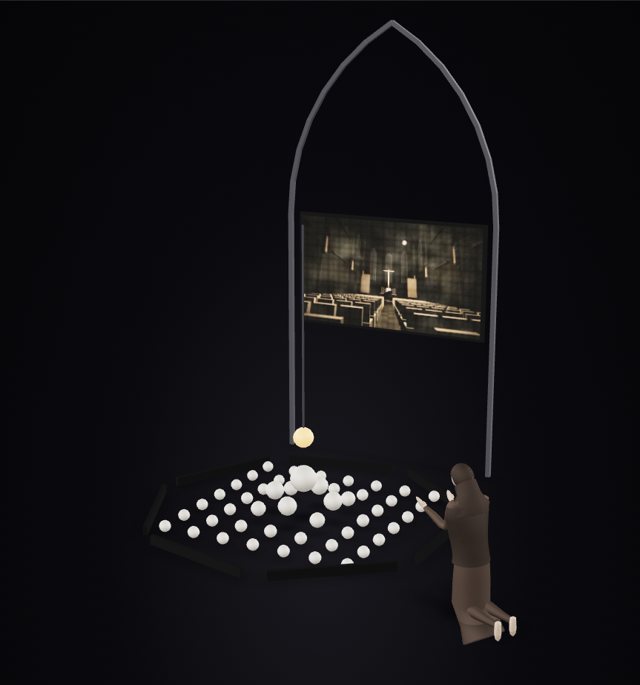
A wandering lamp uncovers a woodcut: Maximilian hears Mass, his court chapel sings. That ensemble became the Hofmusikkapelle. Then the room dissolves into a dot screen that grows finer and finally shimmers.
Sonata IB-flat majorLargo
Father, forgive them, for they know not what they do.
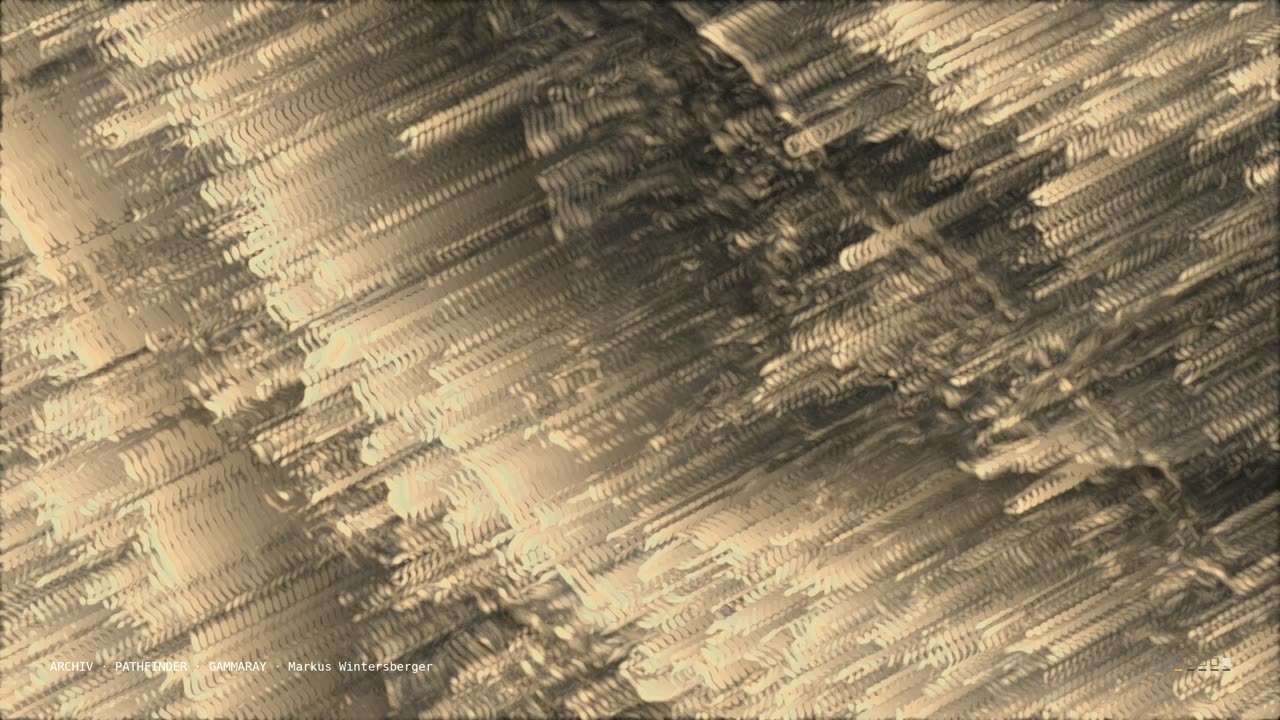
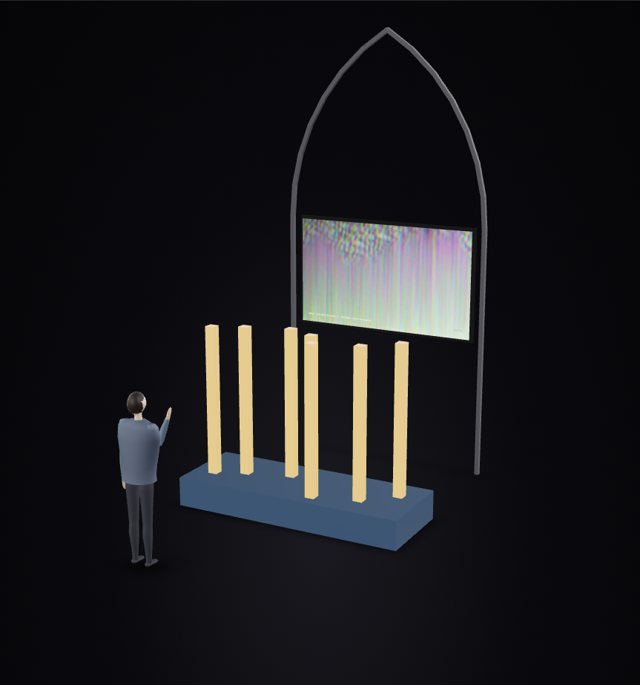
It rains into the image. The colour sinks down the columns, row by row, until only standing streaks are left.
Sonata IIC minor → C majorGrave e cantabile
Today you will be with me in paradise.
A slit camera: the top of the image is earlier than the bottom. Everything pulls upward for four minutes. In the end it is white.
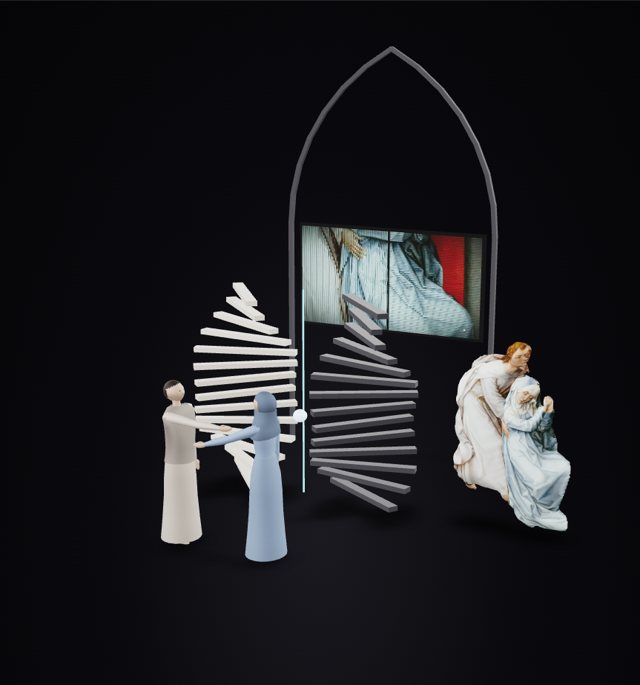
Sonata IIIE majorGrave
Woman, behold your son.
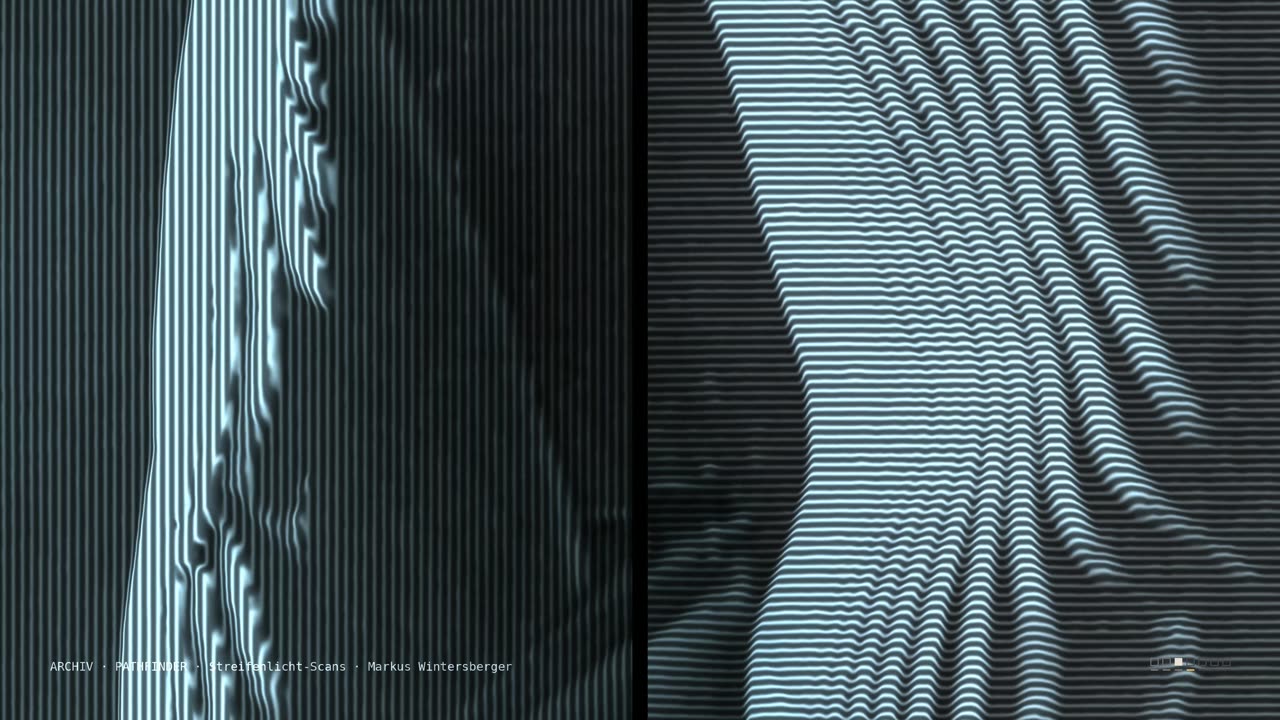
Two panels, one gap. The right side runs two seconds behind the left. Structured light scans both. The distance stays.
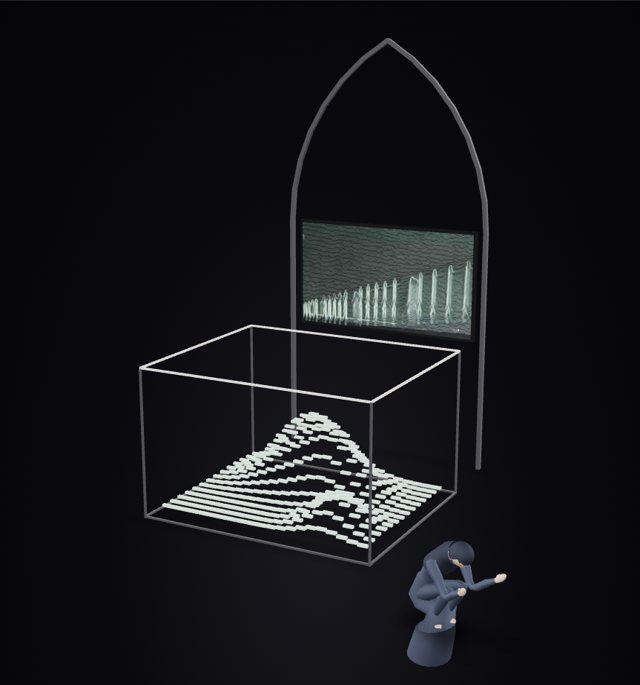
Sonata IVF minorLargo
My God, my God, why have you forsaken me?
Holbein's dead man lies in a box two metres long and thirty centimetres high. The image turns into contour lines, then row after row drops out. In the end there is a flat line.
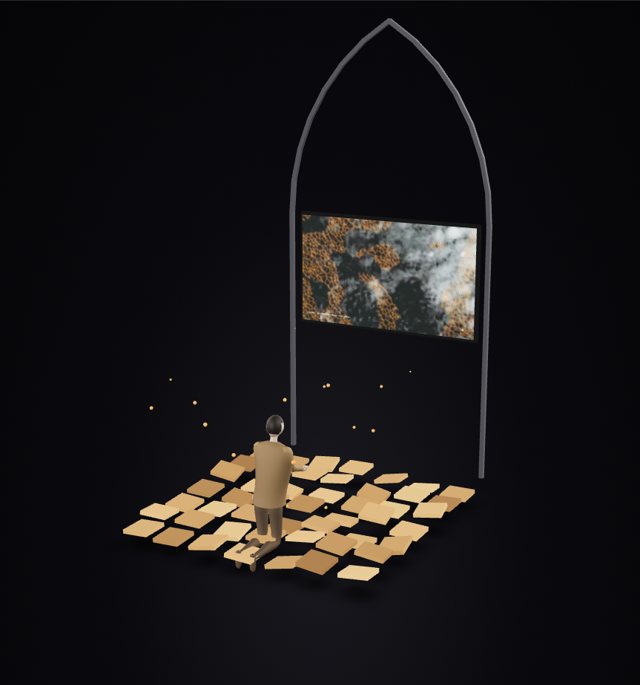
Sonata VA majorAdagio
I thirst.
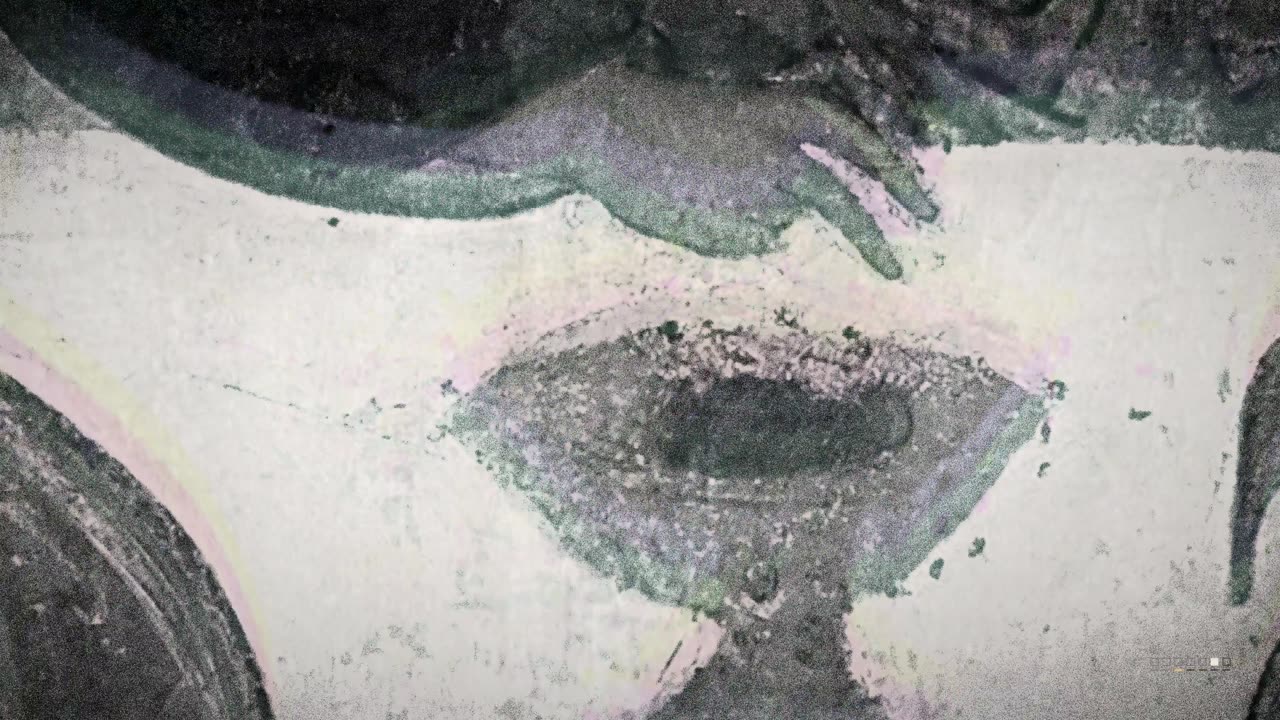
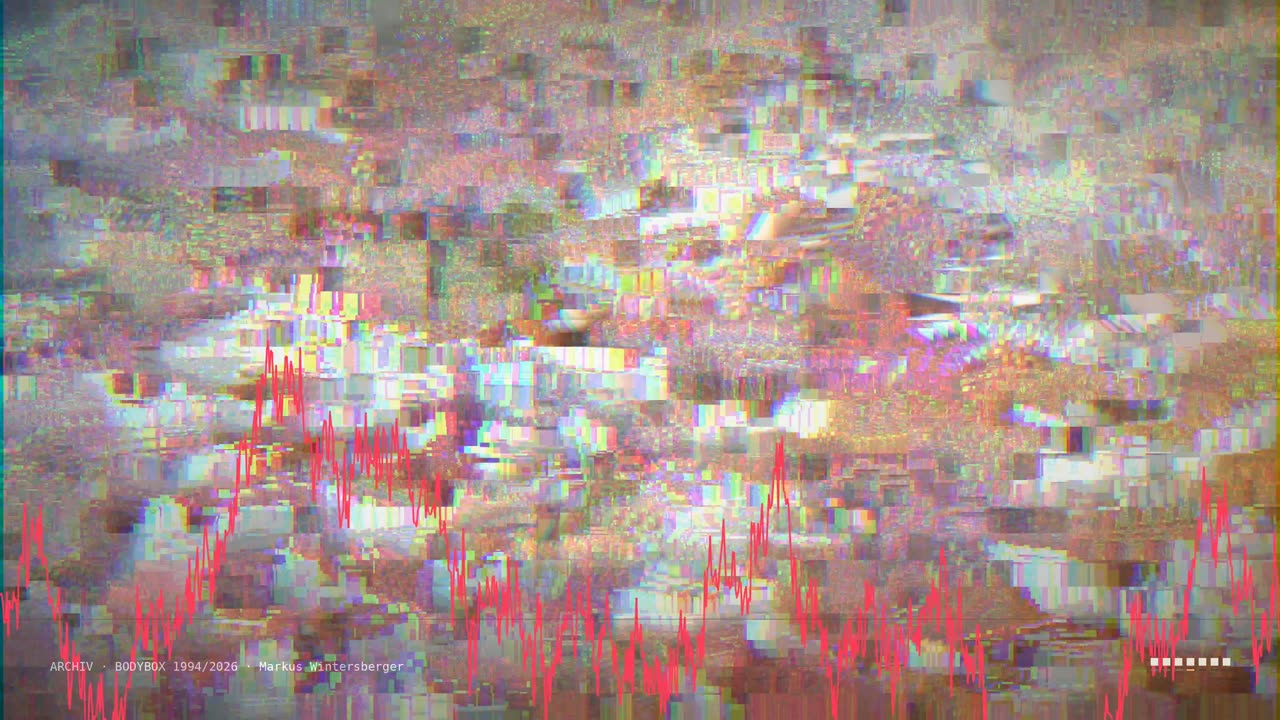
The shortest word: five letters. Heat shimmer, solarisation, cracks eating through the image. The water does not come.
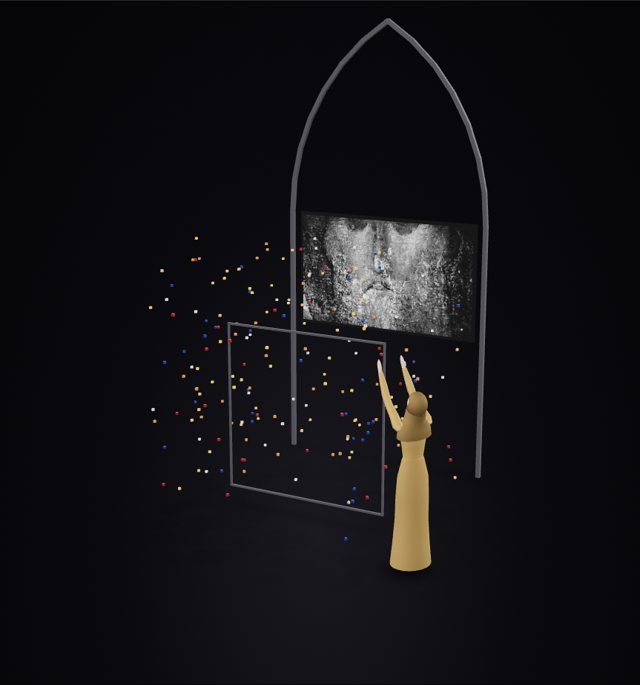
Sonata VIG minor → G majorLento
It is finished.
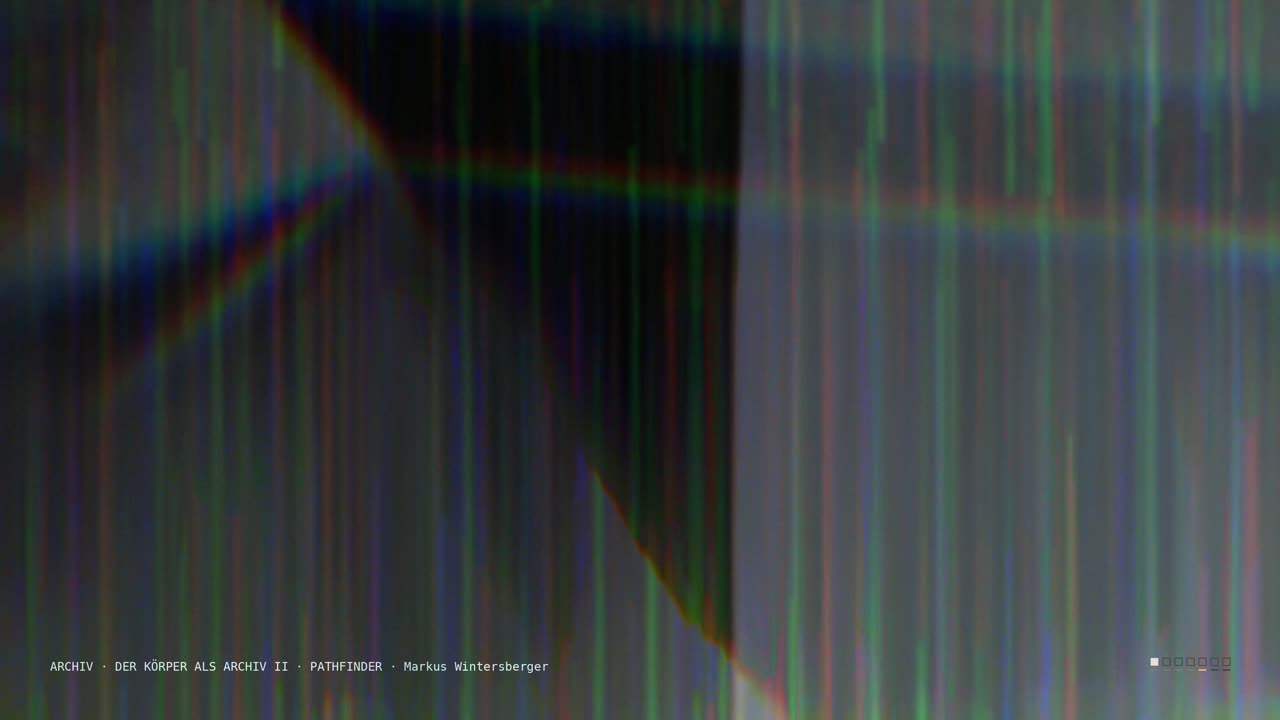
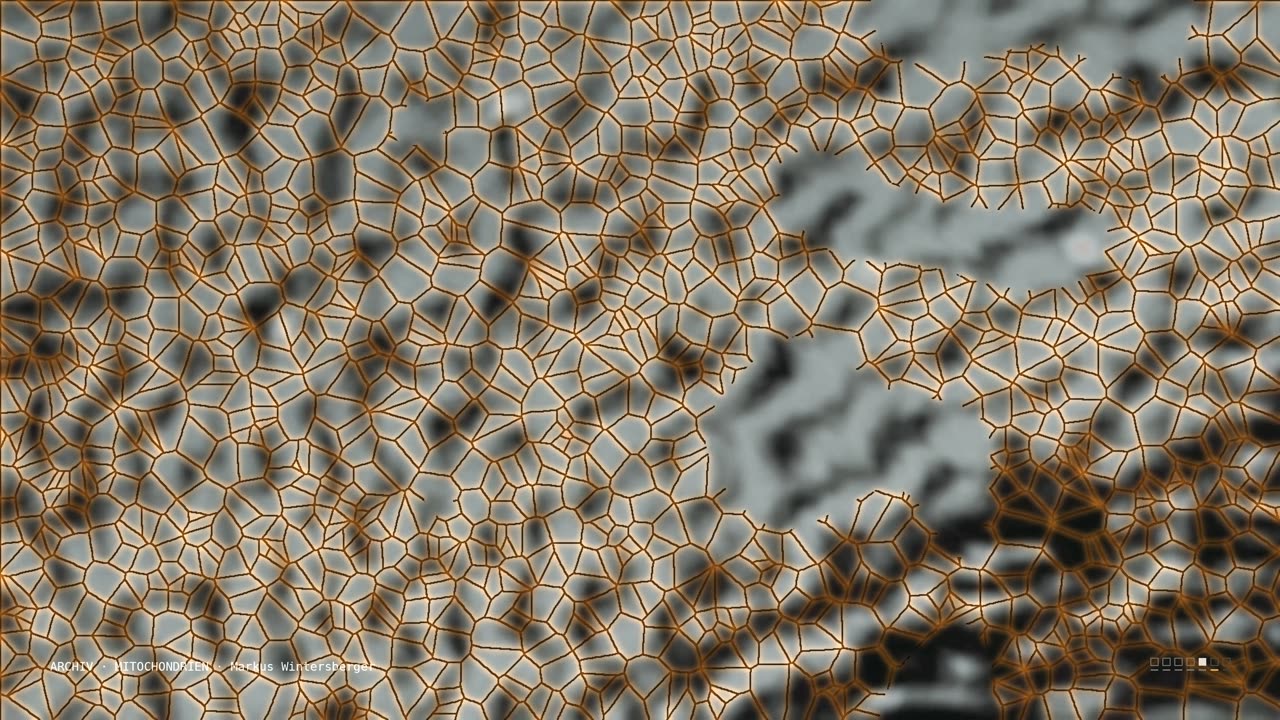
First only points, black and white. Then red, green and blue drift apart in time. Then the colour arrives, and a little gold.
Sonata VIIE-flat majorLargo
Father, into your hands I commend my spirit.
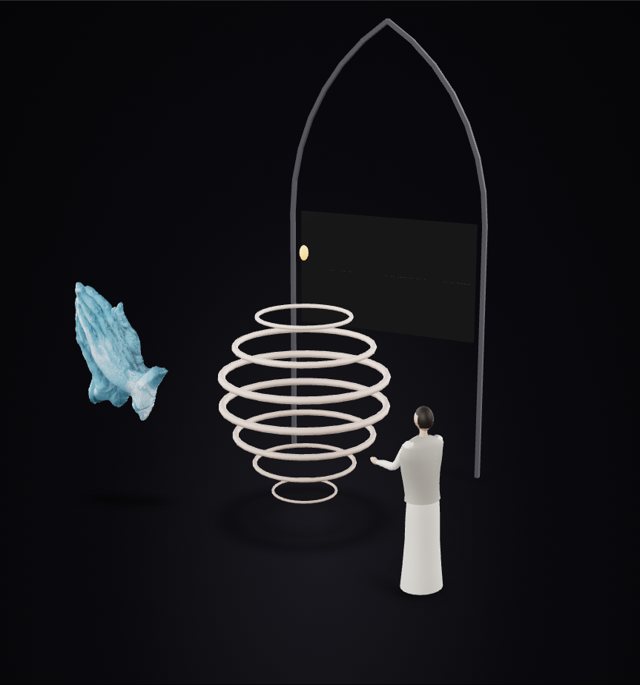
Dürer's hands lie a few steps away in the Albertina. Here only their contours glow, and they breathe. A candle burns. Then it does not.
Il TerremotoC minorPresto e con tutta la forza
And the earth did quake, and the rocks rent.
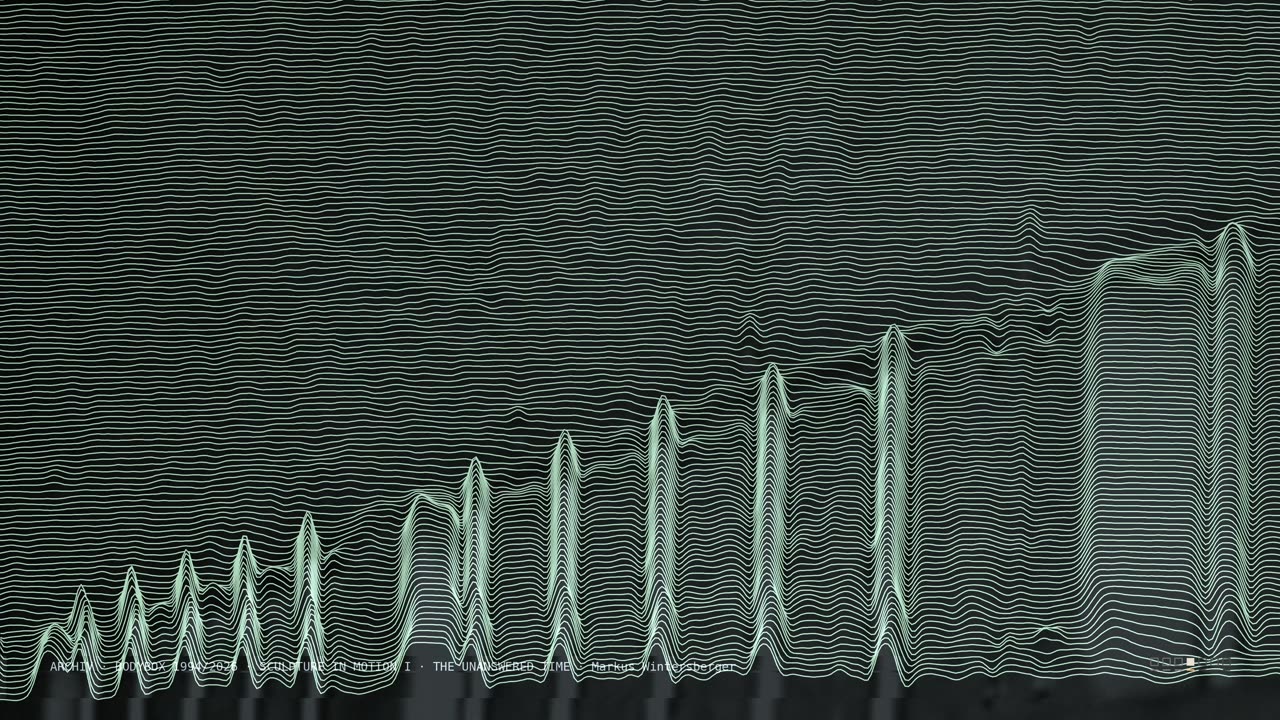
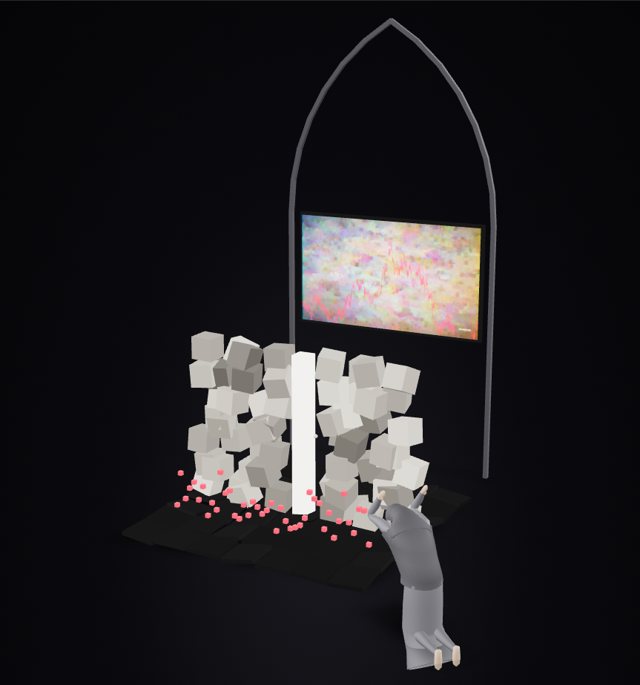
The only movement allowed to tear. A seismograph runs along from the start. Then block failure, feedback, the veil tears. After that, light through the gap, and silence.
◈ AR
Each movement has a kinetic body that works for three minutes: a lamp above a grid of points, sinking rods, rising rings, two panels with a gap. Each has its own soundtrack drawn from its movement. On a phone you can place it in your own room, about 0.8 metres wide. On the desktop there is a preview and a QR code.
Open AR ↗ The chapel as AR model ↗ Berlin as AR model ↗
◆ Instrument
The same nine films, broken into 36 particles: ten seconds of image and sound each. On the desk they can be layered freely, with feedback, mirror and tempo, from the keyboard or via MIDI. The chronology can run underneath. A second window goes to the projector.
◈ Lab
The Hofburgkapelle as a 3D model, rebuilt from the survey plan of the Burghauptmannschaft: nave, net vault, choir with crucifix, three galleries, organ, grand piano. Pick a movement, pick a surface, set the stage, export the plan.
Image behind the crucifix. The tracery windows stay dark and split it into five fields.
The ribs cut the image up. The gaze goes upward, away from the podium.
A gauze in the chancel arch: the black cloth of Cádiz, translucent.
Everything at once. The most expensive variant, meant for the earthquake.
No image. One light swings. The zero point everything else is measured against.
◈ Berlin edition
As a second spatial edition the concept is set on Good Friday, 26 March 2027, at 7 pm in the Französischer Dom, the Französische Friedrichstadtkirche on Berlin’s Gendarmenmarkt: a transverse oval hall with conches, light pilasters and tall round-arched windows, the pulpit with its stage in the east, the organ on the gallery above the entrance. The main surface for the image is the wall behind the pulpit, as a wall projection; optionally two side screens left and right of the pulpit are added. The same nine films and the same particle desk can be played live in it, on screen and as an AR model. A spatial study from photographs, before the site visit.
◆ Roadmap · days until the evening
The roadmap is a proposal.
◈ What is not right yet
Formally clean, without memory and without risk. They keep running in the lab and in the full-screen player. The trailer is silent.
◆ Contributors
 0
 I
 II
 III
 IV
 V
 VI
 VII
 ∿